
Gamification in training: boost your Learning experiences

Gamification in training is a learner-centered pedagogical approach designed to drive engagement. It can take many forms: scenario-based learning, simulations, role-playing, serious games, or gamified quizzes. Increasingly common in blended learning, gamified e-learning modules are now essential to boosting learner engagement and completion rates.
But what exactly does gamification mean? What impact does it have on your training programs and employees? And how can you put it into practice in your own e-learning modules?
Let’s explore why gamification can be such an effective lever for energizing learning and sparking curiosity across your workforce.
What is gamification in training?
A pedagogical method
Gamification refers to the use of game-based methods to deliver both theoretical and practical knowledge. The goal is not to “make learners play,” but rather to enhance learning and retention through positive engagement, avoiding any sense of infantilization.
Gamification is built on the 3Ps Model: Pleasure, Pedagogy, and Performance.
- Pleasure: training should create positive emotions. Learners should enjoy the experience, feel they are learning, and retain knowledge more easily while having fun.
- Pedagogy: gamification must always align with specific learning objectives and be tailored to learner needs.
- Performance: gamification introduces challenges, motivating learners to achieve goals and validate progress.
The benefits of game-based Learning
Benjamin Franklin once said: “Tell me and I forget, teach me and I remember, involve me and I learn.”
Gamification does exactly that, it turns learners into active participants, stimulating cognitive, emotional, and psychological mechanisms that improve both understanding and memory.
It also helps build confidence. In traditional e-learning, learners may feel isolated or discouraged when they fail repeatedly. Gamification reframes mistakes as part of the process, encouraging learners to try again until key knowledge sticks.
In short, gamification sparks interest, strengthens memory retention, reinforces the acquisition of skills, and fosters a sense of belonging.
Key considerations for effective gamification
To be effective, gamification must:
- Add real value: Learners don’t automatically choose to engage with game-like activities during training. Gamification should never be “just for fun”, it must enhance content and outcomes.
- Align with learning objectives: Each game element should support a clear pedagogical goal, integrated into specific parts of the course.
Done right, gamification boosts both engagement and performance, changing how learners perceive training while accelerating skill development.
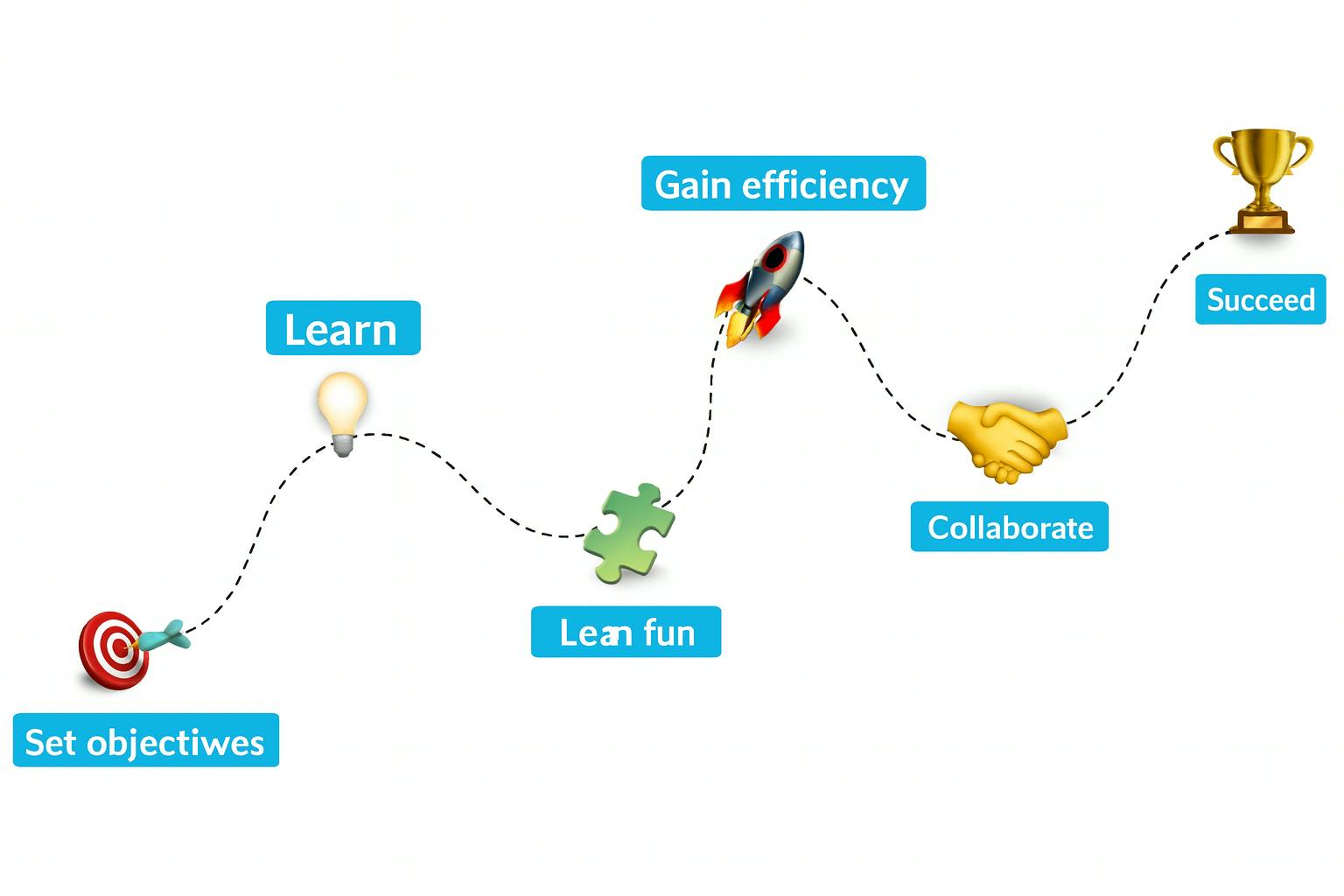
How to gamify your E-Learning modules
Gamification can be embedded in both blended learning (with live sessions) and self-paced e-learning. Here’s how:
Storytelling
Like a narrative thread, storytelling guides learners through the course. Gamification works the same way, using narratives to strengthen immersion and engagement.
Rewards and instant feedback
Points, badges, encouraging messages, and tailored explanations for wrong answers help learners understand mistakes and stay motivated. Feedback loops are essential to gamification, just like in video games.
Formats and interactivity
Gamified training puts learners at the center. Vary content formats, images, videos, links, documents, audio, to hold attention and create richer, more interactive experiences.
3 examples of gamification with Teach Up
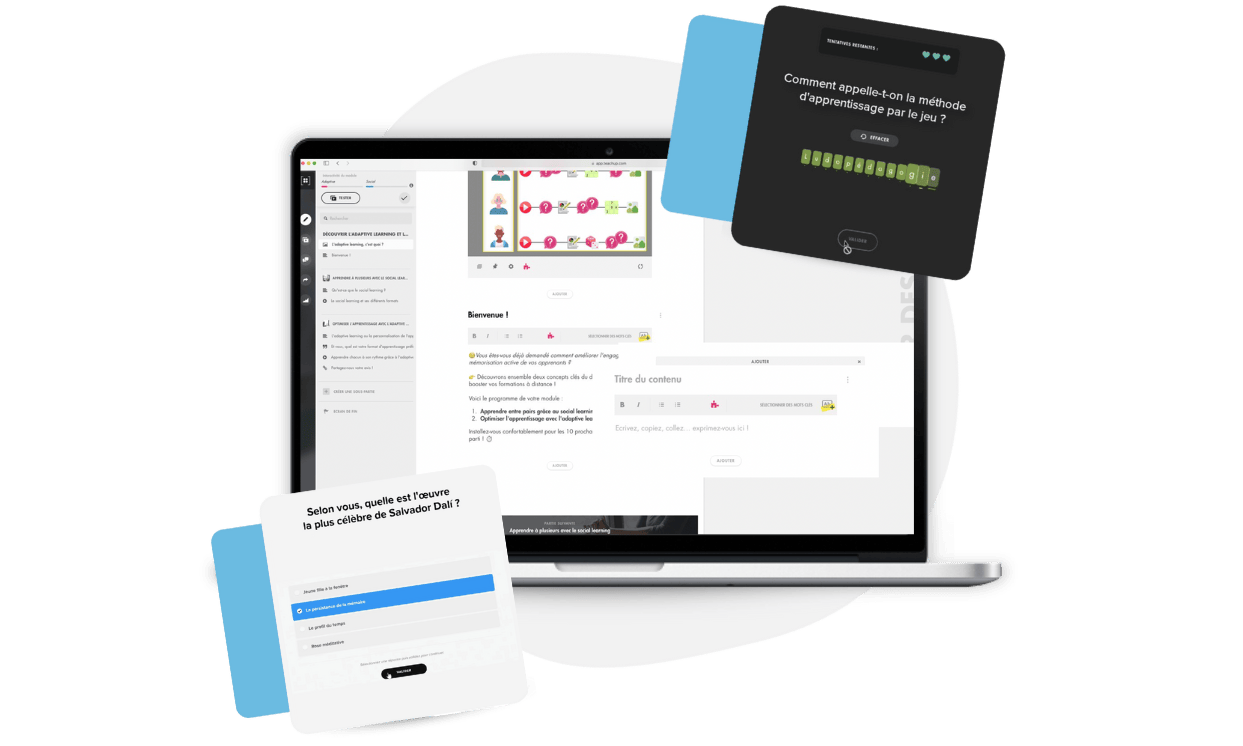
At Teach Up, gamification is embedded throughout the learning journey, combining social learning, interactive games, and adaptive personalization. Here are three examples:
1. Boost engagement with Social Learning
Make training more dynamic by encouraging active participation. With Teach Up, you can integrate collaborative games like polls, discussion walls, or shared GIFs and images. This turns learners into contributors, driving participation and interaction.
2. Reinforce memory with interactive games
Knowledge checks don’t have to feel like tests. In Teach Up modules, every question can be gamified, using quizzes, word searches, open-ended prompts, labels, mystery cards, “master words,” and more. Difficulty adapts in real time to each learner, thanks to Adaptive Learning.
3. Ensure everyone succeeds with Adaptive Learning
Every learner has unique needs. With Adaptive Learning, Teach Up modules adjust dynamically to each learner’s level and interactions. Algorithms personalize the learning path in real time, guiding each participant toward mastery at their own pace.
Want to know more about Teach Up?
Book a meeting with one of our experts